109 Filipino Nurses and Caregivers Complete Preparatory Japanese Language Program at NCF

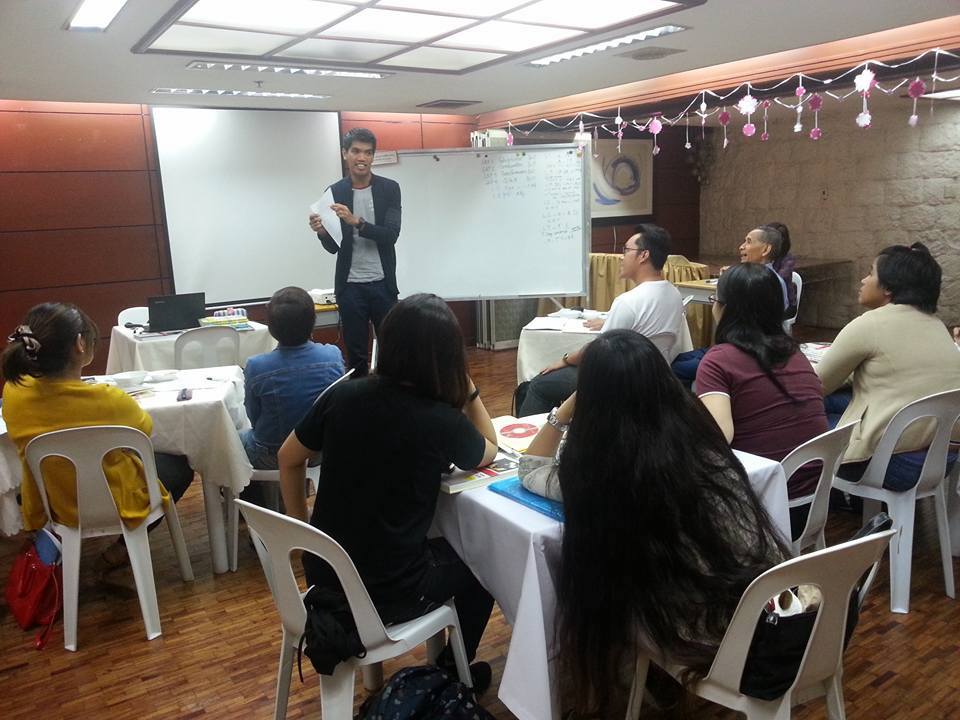
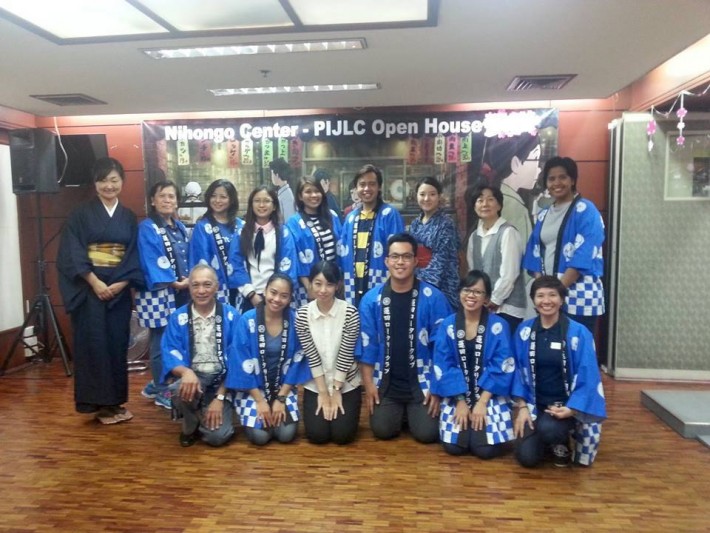
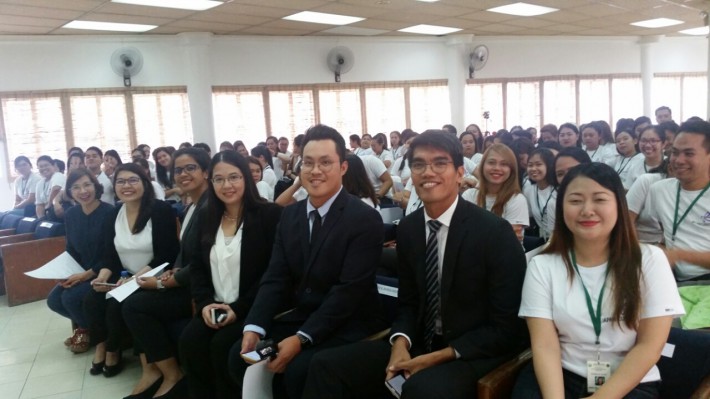
On May 19, 2017, the 9th batch of Filipino nurses and certified care workers completed their preparatory Japanese language training at the Nihongo Center Foundation under the Philippines-Japan Economic Partnership Agreement (EPA). With a closing ceremony held at the President Jose P. Laurel Memorial Hall of the Philippines-Japan Friendship Center in Manila, the 6-month long program successfully produced 315 graduates. Other participants finished their training at TESDA and the Personal Ability Development Foundation (PAD), two other partner institutions for the training program organized together with the Japan Foundation Manila Office (JFMO).

In his opening remarks, JFMO Director, Mr. Hiroaki Uesugi not only gave his sincerest appreciation for the participants’ positive participation and determined efforts, but also thanked the energetic and ceaseless efforts and teamwork of the lecturers and staff members who made sure that the program was at its best. He also encouraged the trainees to think positively and hoped that they will overcome the challenges they may face once they start living, studying, and working in Japan.

Honorable guests Mr. Philip B. Sanvictores, NCF President; Mr. Roberto L. Larga, Director IV, Welfare and Employment Office, P.O.E.A; and Mr. Manabu Yasukawa, First Secretary, Labour Attaché, Embassy of Japan all gave their congratulatory remarks during the program.

This is probably the very first baby steps that you will be taking in your journey of learning Nihongo.” said Mr. Sanvictores. He continued:

When you start off in Japan, please remember that you have a role to play. First you have to be good workers. Secondly, you have to recognize that you are also representing our country, our people, and our soul as Filipinos and our reputations. Please be careful to make sure that the Japanese, your superiors, your patients, the people you work with – they will all be blessed through you because you are doing your job well and the fundamental foundation of that will be language. That is why this is a unique opportunity for each and every one of you to make that step in to a new environment where you are actually going to be a blessing.”

Mr. Manabu Yasukawa commended the participants for their hard work and dedication and echoed the message of the NCF President about the importance of language, specifically mentioning self-discipline and its role in language learning:

“I would like to emphasize the importance of self-discipline in learning the language. We may give you long and intensive training, but without self- discipline, retention might be difficult. You must continue to study everyday even after the training which you will have in the coming months in Japan.”

To address the apprehensions of the graduates about being away from loved ones and being in a different environment, Mr. Yasukawa encouraged them to look at it from another perspective.

“Take advantage of this opportunity to enjoy the sights, food, festivals, and the varied seasons of Japan. Learn about its culture, and build lasting friendships with the people you will meet there. I believe the Japanese are very kind, surely they will appreciate the friendship you will extend to them. I am also certain your respective employers, patients, and caregiving facility residents are looking forward to meeting you and experience the distinct care of Filipinos.”

After the congratulatory remarks, Mr. Uesugi presented the Certificate of Completion to the class representatives and was followed by a message from Ms. Mary Ann Borja, Representative of the Candidates.

To further give support and encouragement to the Japan-bound health workers, Head Leacturer, Josef Carlo Orillo-sensei recalled the first few months of their training:

“At the start of your training, I talked about how a common language becomes a bridge between people of different countries. It is a medium for the sharing of ideas and feelings, a method by which we can learn that despite our differences – the gap of cultures and nations – we all share the same basic needs and wants, thoughts and passions as people.”

For the next months to follow in Japan, he encouraged the trainees to keep on improving their Nihongo:

“Having completed your training, you now have this bridge, this tool for connecting with another person. When you go to Japan, use it, practice it, improve more and more, not only for your work and the eventual goal of passing the licensure exam, but also enrich your relationships with your co-workers and friends.”

The successful trainees will continue another six months of training at a Japanese language institute in Japan before finally getting assigned to hospitals and caregiving facilities all over the country.  After building up on their experiences, the nurse and care worker candidates will be required to take the Japanese national examination for nurses or certified care workers, based on which their work in Japan would continue.

===========

Related Resources:

Speech by Mr. Manabu Yasukawa, First Secretary, Embassy of Japan
Speech by Mr. Philip B. Sanvictores, NCF President
Speech by Josef Orillo Sensei, Head Lecturer
Speech by Mary Ann E. Borja, EPA Candidate
Opening Remarks by Mr. Hiroaki Uesugi, JFMO Director
Photos – Closing Ceremony, 9th Batch of EPA Graduates
Tribute Video:
Kenjiro Ogata Sensei Celebrates 65th Birthday and 25th Year at NCF & PIJLC


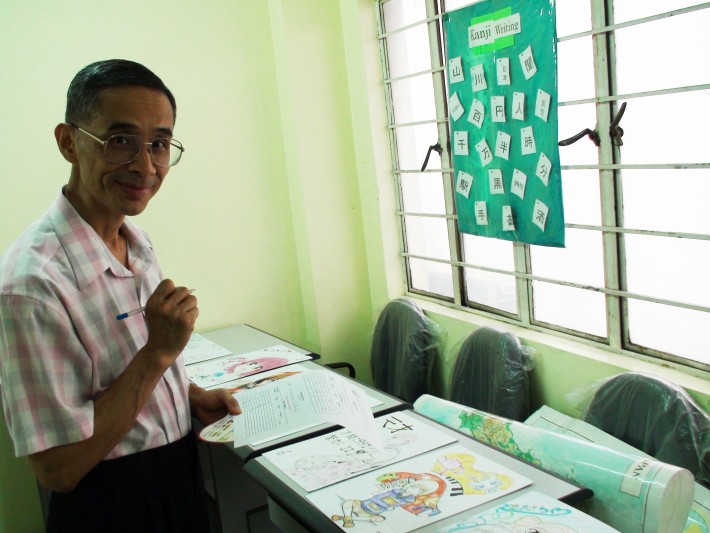
On March 6, NCF and PIJLC Academic Adviser, Kenjiro Ogata sensei celebrated his 65th birthday. Coincidentally, this year also marks his 25th year of unwavering commitment to Japanese language education in the Philippines. To celebrate the two joyous and momentous occasions, teachers, students, and staff of the schools presented a surprise tribute video to Ogata Sensei during the recently concluded Faculty Development Program (FDP) at the NCF Makati campus last March 19, 2017.

Before the video presentation, staff brought out a birthday cake and started singing “Happy Birthday” to Ogata Sensei to his surprise. After the greetings, FDP manager, Keli Biscarra Sensei, engaged the teachers in a short trivia game, which included fun questions and facts about the birthday celebrant.

In the tribute video, colleagues and students thanked Ogata Sensei not only for his invaluable contributions to the schools, but also for his support and guidance in their Nihongo studies and training. There were heartwarming anecdotes from students who are now also Nihongo teachers of how Ogata sensei taught them and helped them pass their Japanese proficiency test.

Moreover, staff and school administrators shared their stories about sensei that reflected the long history of his career as a Nihongo teacher in the Philippines. Throughout the 8-minute long video, Ogata sensei quietly watched with a big smile as everyone wished him good health and more birthdays to come.

In addition, The Philippines-Japan Friendship Foundation (PJFF), which established and oversees NCF and PIJLC, tendered a separate dinner for Ogata Sensei on March 6. PJFF board members who were present included Amb. Joey Laurel, Mr. Francis Laurel, Ms. Marilen Laurel-Loinaz, Ms. Ditas Laurel-Marquez, Mr. Toti Torres, Mr. Bobby Castillo, and Mr. JJ Soriano. NCF and PIJLC President, Philip Sanvictores, together with other school officials and faculty, also attended the intimate dinner where everyone offered a toast to congratulate Ogata sensei and wish him more years at NCF and PIJLC.

=========================

Related Resources:

Ogata Sensei 65th Birthday Photos


NCF Faculty Development Program:
Building a Corps of Highly Qualified Filipino Teachers of Nihongo

On August 9, 2015, The Nihongo Center Foundation held its first Faculty Development Program (FDP) meeting at its Makati campus.

Fast forward to 2017 and the program has not only elevated the teaching skills of individual teachers but has also fostered serendipitous collaboration among faculty members, which ultimately supports the school’s innovative works in developing and improving Nihongo instruction in the Philippines and maintaining its position as the preeminent institution for Japanese Language education for Filipinos.

In the following interview, FDP program manager, Ms. Carmencita K.C. Biscarra or “Keli Sensei” as she is fondly referred to at NCF, talks more about the background of the program and her insights into being a Filipino Nihongo teacher.

Q: Why was the FDP program started?

KS: Management felt that NCF/PIJLC teachers needed to upgrade their teaching skills to meet the increasing demand for Nihongo classes by various industries.


Q: What are the specific goals of the program?

KS: Aside from providing training for teachers to expand their teaching/career skills, the program also aims to develop standard teaching techniques so that we will be able to provide quality Nihongo courses in all classes.

fdp1

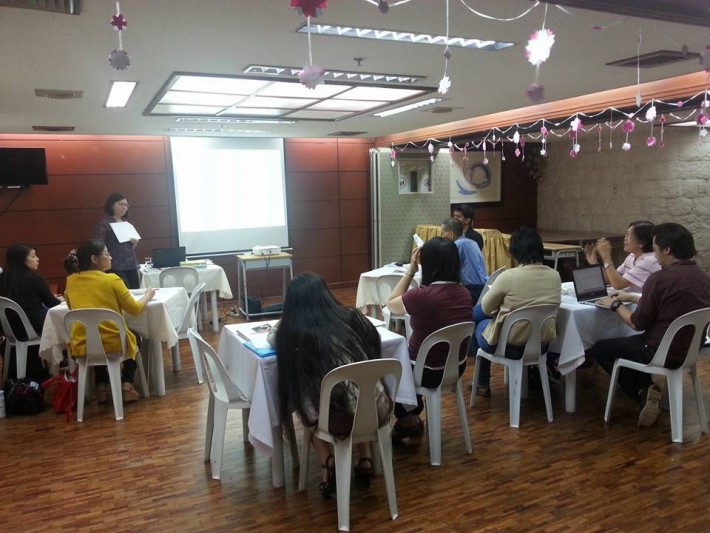
Keli Sensei heading a discussion at a recent FDP at NCF Makati

Q: How do you conduct the training sessions/meetings (i.e. training flow, regular activities, materials used in the training, etc.)?

KS: The program for each meeting includes a study session regarding Nihongo Education—most often we would have workshops and sharing to reflect on our teaching methods and learn from other teachers’ techniques.

New teaching techniques are introduced by having the faculty members experience these techniques first hand (like Shadowing). Sometimes teachers are requested to handle a session by sharing what he/she considers a useful teaching technique.

There is also an update every meeting regarding admin policies and reports on activities related to the school, like when we attended the ASCOJA symposium in Bangkok last year, or when we visited schools and universities in Japan to look for possibilities for exchange programs.  

Q: What significant accomplishments have happened since NCF started the program?

KS: We’ve been able to develop our own rigid teacher-training program, which was implemented for the training of our four new teachers who have graduated and are now actively teaching at the school.

In the teacher-training program, aspiring Nihongo teachers are asked to attend workshops to learn the basic process in teaching a lesson, and then write lesson plans for the first course that they will be handling (Basic Japanese 1).

They are then required to do class observations for an entire Basic Japanese 1 course, each time writing a reflection on the techniques observed and comparing one’s lesson plan with the class flow. Discussions regarding this reflection sheet would then be held with me.

At the end of this class observation phase of the training, the trainees move on to handle their own Basic Japanese 1 class, where I would be observing each session. At the end of every class, we hold a discussion to assess how the class went and share points for improvement.  

fdp2

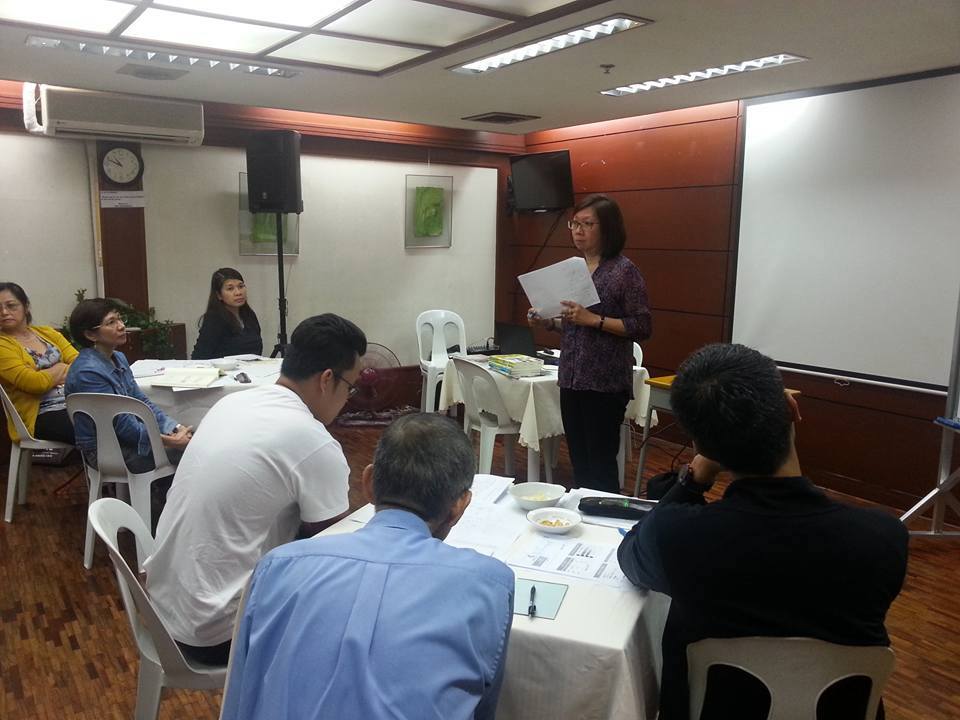
Teachers listening attentively during a sharing session at an FDP meeting

Q:  Other thoughts about the FDP and teacher-training program of NCF?

KS: The FDP has been an avenue for us teachers to improve our skills and develop camaraderie among faculty members—experienced teachers and newcomers alike.

Through the program, we have also become more involved in school matters, which is also beneficial to NCF. The frequency of the faculty meetings resulted in increased input of ideas from the teachers with regards to school matters and an overhaul of the courses/materials of the school.

For the teacher-training program, it’s done one-on-one, so it takes a lot of time and dedication both on the part of the trainee and trainer. In that sense, you can see that our training is designed for aspiring teachers who really have a heart for teaching and can see themselves working as a Nihongo teacher for years to come.

Feedback about the FDP has been very positive with the participants concurring that the regular meetings and sharing have helped them evaluate their strengths and weaknesses and find ways to improve their teaching skills. They also believe that it’s high time to have a professional development program like the FDP and standardize teaching techniques so that they can deliver quality lessons each time to their students.

The Faculty Development Program is open to NCF and PIJLC teachers who meet the following requirements:

  • Must possess Nihongo knowledge of JLPT N2 level

*N3 passers may be considered, provided that the individual continues to take JLPT N2 regularly until he/she passes N2.
*JLPT N2 takers will be required to attend FDP review sessions  

  • Must possess a baccalaureate degree, or have definite plans to acquire a degree in the near future
  • Must commit to participate in the FDP
  • Must not be an owner/co-owner of an institution offering Nihongo Courses


FDP meetings are done quarterly on a Sunday morning loosely set on February, May, August, and November (i.e. four times a year). The alternating venues are NCF Makati and Manila campuses.

For more details on how to be part of the Nihongo Center Foundation faculty, you may contact:

Makati Campus
Tel. 892-4916 to 19
E-mail: makati@nihongocenter.com

Manila Campus
Tel. 735-3179
E-mail: ncfmanila@gmail.com

=================

Resources:

PowerPoint Presentation: Introduction of the FDP
PowerPoint Presentation: Opening Remarks of NCF Pres. Philip B. Sanvictores on 1st FDP Meeting, August 9, 2015
FDP Photos


NCF Promotes Japanese Traditional and Pop Culture in 2016 Open House

Fun cultural activities and free Japanese language lessons welcomed visitors to this year’s Nihongo Center Foundation (NCF) Open House. Held last October 8 from 9 a.m. to 4:30 p.m. at the Makati Campus, NCF students and guests participated and enjoyed activities like karaoke, cosplay, origami, and even got a chance to show off their drawing skills through the event’s annual drawing contest.

After the morning registration for visitors, the Open House kicked-off with the Kana Writing contest where participants displayed their writing skills in Hiragana. It was followed by the open-theme Drawing contest where the contestants’ artworks were judged based on neatness and the creative use of colors and shades.

In the afternoon, the much-awaited Karaoke contest drew an excited audience as 10 hopefuls tried to deliver their best renditions of their favorite Japanese songs. Songstress, Ms. Ruu Kurosawa, took the top prize for her performance of the song “Sandpiper.”

Also a major yearly activity in the NCF Open House was the Cosplay contest where participants dressed up in elaborate costumes and detailed make-up based on different popular Anime and video game characters. Pictures of the contestants were taken in the morning and posted for voting. Attendees of the Open House all had a chance to vote for their favorite cosplayer and winners were announced at the end of the day.

Aside from the cultural activities and contests, there were also games and booths from NCF’s partners in spreading Japanese Language and Culture like Heart International Corporation, Jellyfish Education Consultancy, Chikyujin, and Anizone. All visitors were also invited to posts their photos enjoying the activities on their Facebook account. Guests who got the most number of likes for their picture took home some cool prizes and gift certificates courtesy of NCF, The Philippine Institute of Japanese Language and Culture (PIJLC), and Kake Educational Institution.

Other activities that were lined up throughout the day included:

Kirigami – a variation of Origami where paper is folded and then cut to create different paper artworks.
Furoshiki – traditional Japanese cloth used for wrapping gifts and other goods.
Omikuji – Japanese fortune-telling paper strips
Yukata No Kitsuke – Wearing of Japanese traditional summer kimono called “Yukata.”

Asked about the annual NCF Open House, Japanese language teacher and event organizer, Ms. Frances Mendoza, explained:

“The Open House is held annually to provide a venue, not only for our students but for anyone who is interested, to experience Japanese cultural activities and pop culture. Smaller in scale and scope than Japan Foundation’s event, it has a community feel, a bunka matsuri atmosphere. Nihongo Center aims to foster not only love of language but also culture, which is an integral part of language acquisition.”

For the list of winners and event photos, please refer to the links below.

=============

References:

List of Winners NCF Open House 2017
NCF Open House Photo Album


NCF Officially Starts Japanese Language Training for 9th Batch of Filipino Nurses and Care Workers for Japan

The Nihongo Center Foundation (NCF) together with the Japan Foundation Manila Office (JFMO) officially welcomed the 9th batch of Filipino Nurses and Care Workers who will undergo the Preparatory Japanese-Language Training Program under the Japan-Philippines Economic Partnership Agreement (JPEPA).

Key speakers graced the opening ceremony held last November 4 at the President Jose P. Laurel Hall of The Philippines-Japan Friendship Center – Manila. They included NCF President Philip Sanvictores, JFMO Director Hiroaki Uesugi, and Director Nimfa de Guzman of the Welfare Employment Office of the Philippine Overseas Employment Agency (POEA). Head teacher for the program, Josef Orillio-sensei and Secretary Hiroyuki Enoki, Labor Attache of Japan in the Philippines who all gave their inspirational words to the more than 100 candidates present at the event.

The training will run for six months — until May 19, 2017. Thereafter, the students will undergo another six months of training at a Japanese language institute in Japan before finally getting assigned to hospitals and caregiving facilities all over the country. After building up on their experiences, the nurse and care worker candidates will be required to take the Japanese national examination for nurses or certified care workers, based on which their work in Japan would continue..

Challenges of Learning Nihongo

About learning Nihongo, Pres. Sanvictores explained the challenges that lie ahead:

“…in Japan – at your work place, when you meet people – you will have to speak and use proper Nihongo so that you don’t get misunderstood. It’s not as if you put a USB drive into your head and then you speak perfect Nihongo. Learning Nihongo will take time, it will take effort, it will take your passion, and dedication.”

Moreover, Orillio-sensei explained that learning a language is like becoming a child again and that it is deeply connected to customs and culture:

“These coming months of language training will be a time of discovery. I invite all of you to meet this challenge with the open-mindedness and the enthusiasm of a child discovering a way to make his feelings and thoughts understood, and experience the wonder of sharing a common language that can bridge the distance between nations and cultures.”

Support and Encouragement

Director Uesugi, meanwhile, encouraged the students to study hard but also to enjoy their time in the program:

“We will do the best we can to help you learn Japanese language as quickly and as effectively as possible while you are here. Alam kong mahirap ang Japanese Language pero sana matuto kayo nang mabuti sa pamamagitan ng programang ito.  Mag-aral kayo nang mabuti at gusto ko sanang mag-enjoy rin kayo.”

Director De Guzman had more words of support for the select group of participants:

“Our advice is for you to just believe in yourself, follow the teachings of your sensei (teachers), enjoy while imbibing the unique and beautiful culture of Japan and by the Grace of the Almighty, you can do it (pass level N5 of the Japanese Proficiency Test)—and who knows, even better!”

Reading a speech on behalf of Japanese Ambassador to Manila, Amb. Kazuhide Ishikawa, Secretary Hiroyuki Enoki conveyed that the Ambassador is very happy about the development of the program and would like to extend his gratitude to the people and organizations behind it:

“I would like to congratulate our 9th batch of kangoshi and kaigofukushihi candidates on passing the selection and matching process.

I would like to conclude my remarks by expressing my gratitude for everyone who is behind this program, most especially for our friends at DOLE, POEA, TESDA, Japan Foundation, Nihongo Center Foundation, and PAD Foundation. I commend all of you for your hard work in contributing to the success of this program for nurses and careworkers. With the new chiefs of the Philippine government agencies, we would like to continue our effort for the further improvement of this program.”

As a reply to the words of support and encouragement, Ms. Marian Vanessa Cristobal Lualhati spoke on behalf of her fellow students. “I am now 30 years old and came to the point in my life wherein I want to make something bigger and more meaningful, as such I am joining JPEPA,” said the nurse who has been working at the Department of Social Welfare and Development (DSWD) for nine years.

Lualhati added, “I believe that caregiving is one of the most gratifying jobs…Taking care of someone can transform life — mine, yours, ours — forever. That is what life is all about.”

For the 9th batch, as with previous batches, the objective of the program is to help candidates acquire basic knowledge and usage of Nihongo and learn specific terms and expressions essential for their line of work. They will also be given lectures on culture and general life in Japan and how to develop habits for continuous and autonomous learning even after they graduate from the program.

Resources:

Full speeches of the key speakers:
Philip B. Sanvictores, NCF President
Hiroaki Uesugi, JFMO Director
Nimfa de Guzman, POEA
Amb. Kazuhide Ishikawa, Japanese Embassy, Manila
(delivered by Hiroyuki Enoki, Labor Attache of Japan in the Philippines)
Josef Orillio, Program Head Teacher
Marian Lualhati, Student Representative

Photo Album


Page 9 of 13First...8910...Last
RSS
Facebook
LinkedIn

Archives