1943
Fifty young Filipinos were selected by Japanese military authorities in 1943/1944 to study in Japan with the aim of training them in the Japanese language and educating them on Japanese history, culture and its role in the Greater East Asia Co-Prosperity Sphere. It was hoped that these young men would become future leaders and serve as bridges (“Kakehashi” 架け橋) between the Philippines and Japan.
In total, some 200 young men from territories occupied by Japan were sent to Japan under the Nanpo Tokubetsu Ryugakusei Program (1943-1945). Among the 50 Filipinos were sons of high-ranking officials of the Philippine wartime government, young men with high academic credentials, and former Filipino USAFFE soldiers recruited from the Bureau of Constabulary (police). The youngest in the group were only 15 years old while the older ones (constabulary officers) were in their mid- to late-20s.
“During the Japanese occupation of the Philippines, the Japanese government sponsored students to study in Japan, with two groups being sent Japan in 1943 and 1944. The program was administrated out of the former American School in Japan by a part of the Ministry of Greater East Asia. Prior to departing for Japan, the students were disciplined by the Second Republic Constabulary to cleanse their thinking of anti-Japanese sentiments; this was conducted at Malacañang, but only after the students had passed individual interviews with a panel of Japanese officials which included General Wachi. In total there were a total of 51 students who studied in Japan under the program, referred to as “Nantoku” ナントク.”
https://en.wikipedia.org/wiki/Pensionado_Act
“… students from Southeast Asian Countries, “Nampo Tokubetsu Ryugakusei” in Japanese, were the first foreign students sponsored by the Japanese government. At that time, Japan had a plan to establish the “Greater East Asia Co-Prosperity Sphere,” and these students were selected from Southeast Asian countries to become leaders of said sphere. For this purpose, 205 youth came to Japan between 1943 and 1944.”
https://hiroshimaforpeace.com/en/the-ruins-of-the-konan-dormitory/
The first group of Filipino Nantoku ‘pensionados’ left on July 8, 1943 while the second group reached Japan in June 1944. They all went to the International Students Institute (Kokusai Gakuyu Kai 国際学友会), a Japanese language school in Tokyo where they were school mates with similarly selected Nantoku from Burma, Thailand, Java, Sumatra, Malaya and Brunei. After completing their basic Japanese language training, the Nantoku were sent to various schools in Japan – Kyushu, Hiroshima, Gifu and others. On the other hand, the constabulary officers were sent to the police or the military academies; and were repatriated back to their respective countries ahead of the civilian students.
While their lives as foreign students in wartime Japan was characterized by complicated, extraordinary situations and travails, in hindsight, the Nantoku would recall their experiences to be generally and notably positive. Perhaps subconsciously, they gradually inculcated some of the virtues and principles of Bushido (the warrior way), such as: discipline, self-control, politeness, honesty, honor, courage, benevolence and patriotism.
The Nantoku dispersed amidst the confusion as the war ended in 1945. Most returned to their respective countries although some chose to remain in Japan and work for the Allied occupation. As years passed, they pursued their careers and many rose to prominence in government, politics, the military, business and industry, the academe and the professions. They raised families and in their own way contributed to the postwar reconstruction of their countries.
Post War Philippines-Japan Relations
In the Philippines, dramatic events unfolded that charted paths for Philippines-Japan relations, among which were:
- 1954 : Japanese government launches the Monbusho Scholarship Program
- 1956 : Diplomatic relations between the Philippines and Japan were normalized; War reparations agreement concluded
- 1960 : Treaty of Amity, Commerce and Navigation signed (but ratified only in 1973)
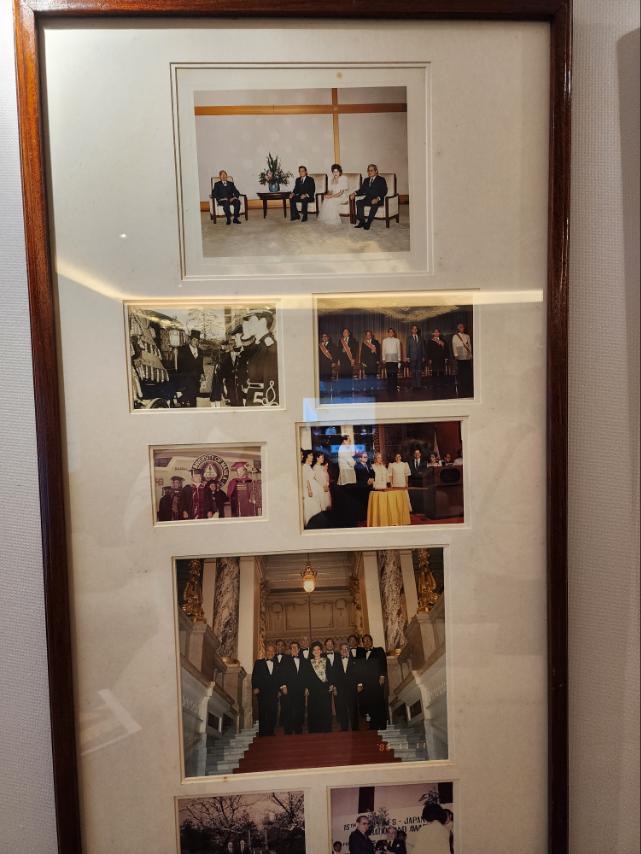
- 1966 : On a state visit to Japan, President Ferdinand Marcos meets Emperor Hirohito in Tokyo
- 1972 : Japanese Prime Minister TANAKA Kakuei visits the Philippines
- 1975 : Japan overtakes the United States as the largest source of direct foreign investments in the Philippines
- 1977 : On a state visit to the Philippines, Prime Minister FUKUDA Takeo proclaims the Fukuda Doctrine of “Heart-to-Heart” relations between Japan and Southeast Asia
- 1986 : President Corazon C. Aquino visits Japan and meets Emperor Hirohito; she returned in 1989 for the funeral of Emperor Showa (Hirohito) and in 1990 for the enthronement of Emperor Heisei (Akihito)
- 2001 : Japan becomes the largest source of Official Development Assistance to the Philippines
Meanwhile, Jose P. Laurel – President of the Japan-occupied Second Philippine Republic (1943-1945) – reemerged in the country’s political scene when he was overwhelmingly elected in 1951 to the Philippine Senate, a clear vindication from criticisms levied against him for his role as Philippine President during the war. He notably advocated democracy and economic nationalism, including what was then the audacious concept of promoting friendship and cooperation with Japan, whom most Filipinos then despised as a former enemy.
It is noteworthy that most if not all of the Nantoku who were in Japan during the war knew of and understood the sacrifices and courage of President Laurel and the officials who served with him during the perilous Laurel administration. They witnessed his patriotism, especially as the war was coming to an end when President Laurel, his family and a few members of his cabinet were exiled to Nara. They trailed the twists and turns of Jose P. Laurel’s life, as the brave Filipino patriot-leader during the most difficult chapter of Philippine history (1941-1945), the evacuation to Baguio and exile to Nara (1945), his 10-month incarceration in Japan after the war (1945-19465), the general amnesty that followed (1948), then later, his vindication as an overwhelmingly elected senator (1951) and highly revered statesman.
On November 5, 1959, the day he was scheduled to preside over the organizational meeting of The Philippines-Japan Society, Jose P. Laurel suffered a massive stroke, and passed away the following day. Some of the Nantoku were invited to the said meeting and were crestfallen at the sudden demise of a great Filipino leader.
The Philippines-Japan Society and the Nantoku
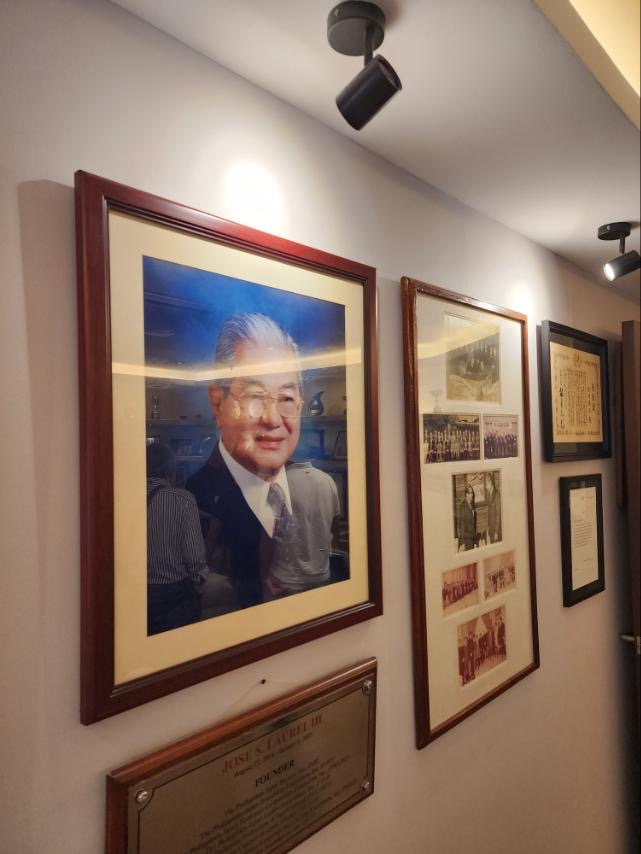
In 1966, Jose S. Laurel III, himself a former student in Japan (a graduate of the prestigious Imperial Military Academy 陸軍士官学校 1934-1937) was designated Philippine Ambassador to Japan. At the end of his tour of duty in 1971, he went on to establish The Philippines-Japan Society which his late father envisioned but did not live see 13 years earlier.
Under the visionary leadership of Ambassador Jose S. Laurel III – whom the Nantoku and all other former students in Japan called their Dai-Dai Senpai 大大先輩 – a network of associations affiliated with the Philippines-Japan Society, all dedicated to the promotion of strong, close and friendly relations with Japan, were subsequently established:
- 1972 : The Philippines-Japan Society, Inc.
- 1973 : The Philippines-Japan Economic Cooperation Committee, Inc.
- 1974 : The Philippines-Japan Friendship Foundation, Inc.
- 1975 : The Philippines-Japan Ladies Association, Inc.
- 1976 : The Philippine Federation of Japan Alumni, Inc.
- 1977 : ASEAN Council of Japan Alumni
- 1991 : Philippine Institute of Japanese Language & Culture Foundation, Inc.
- 1997 : Nihongo Center Foundation, Inc
Alongside Ambassador Laurel in organizing and actively participating in the diverse activities of these civic associations were the Nantoku.
Undertaking this Project (Nantoku Program) is envisioned to establish the link between cultures and peoples in the spirit of the Fukuda Doctrine of Heart-to-Heart relationships between Japan and the peoples of Southeast Asia.
The Program hopes to nurture and continue the friendship and fraternity of the Nantoku among past, current and future generations of Ryugakusei.
It also hopes to provide a foundation for understanding, appreciating and promoting the Ryugaku experience, not only for Filipinos but for the rest of ASEAN Ryugakusei as well.