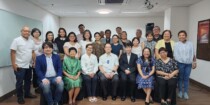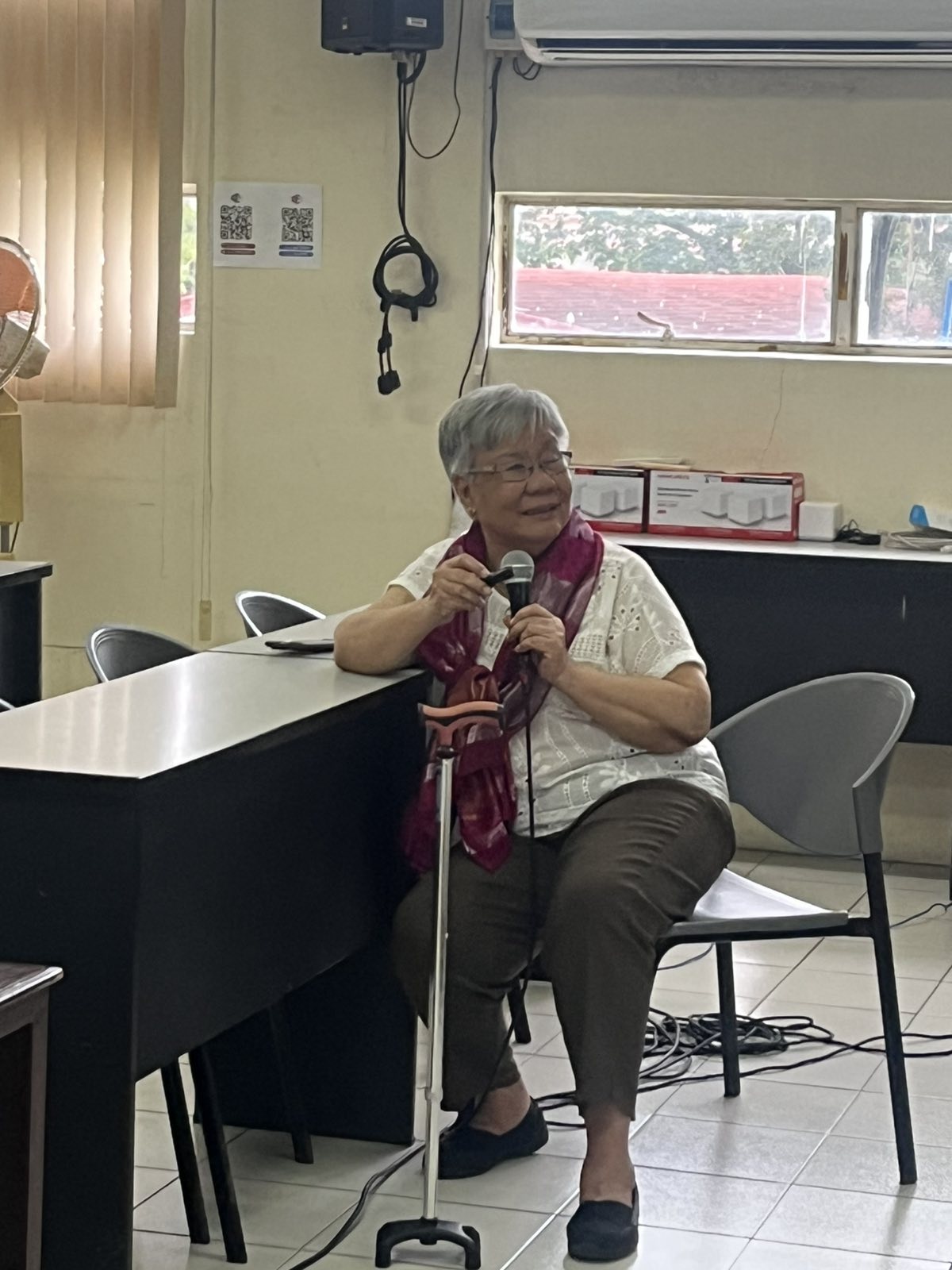
On March 29, 2025, the Samahan ng mga Pilipinong Nag-Aral at Nanirahan sa Nippon (SAPILNIP) continued its “Nantoku Lecture Series” at the University of the Philippines Visayas, Iloilo City Campus. The featured speaker, Dr. Ma. Luisa Mabunay, Ph.D., a retired professor from UP Visayas, delivered a powerful and enlightening lecture on the little-known history of the Imin—early Japanese immigrants who settled in Iloilo during the early 20th century.
The “Nantoku Lectures” are part of SAPILNIP’s efforts, led by descendants of the wartime Nanpo Tokubetsu Ryugakusei (南方特別留学生 or “Nantoku”), to rediscover and discuss neglected histories of Filipino-Japanese encounters. This series seeks to explore individual and collective narratives that highlight the long-standing human connections between the two nations.
Framed within the theme of “Japanese Migration and Memory,” Dr. Mabunay’s presentation shed light on the Imin’s overlooked legacy as economic refugees and settlers, many of whom became entangled in the turbulent currents of war and occupation. Through carefully retracing historical narratives and personal accounts, the lecture invited attendees to reflect on how these migrants shaped Iloilo’s cultural and economic landscape.
Dr. Mabunay narrated the Imin’s journey— from their arrival and settlement in Iloilo to the social stigmas and prejudices their descendants faced in the years following the Second World War. She emphasized how these “suppressed selves” became silent witnesses to a “lost” community whose presence gradually disappeared from public memory and historical records due to postwar repatriation and erasure. Dr. Mabunay discussed how the rise of global migration and war tensions in the early 20th century positioned the Imin in a vulnerable space between belonging and othering. She highlighted how Japanese laborers who initially migrated for agricultural and construction work—particularly in Iloilo’s economic zones—contributed quietly but significantly to the local economy. The lecture also explored themes of reconciliation and remembrance, which highlighted contemporary efforts to reconnect with the past through family reunions, memorials, and public initiatives that honor the Imin legacy. These gestures not only provide closure for descendants but also foster broader conversations about identity, belonging, and historical justice. Dr. Mabunay further reflected on how local oral histories and the rediscovery of graves, documents, and photographs have helped piece together fragmented accounts of Japanese-Filipino interactions in Iloilo.
Special attention was also given to the Nikkeijin— descendants of Japanese migrants—and their continuing efforts to reclaim identity amidst the broader context of economic migration. Their stories serve as a reminder of the deep-seated ties between the Philippines and Japan, shaped not only by official diplomacy but also by personal and collective encounters across time.
To cap off the event, participants were invited to accomplish a survey questionnaire— a reflective activity aimed at capturing their insights and responses to the lecture. This final segment contributes to SAPILNIP’s ongoing commitment to documenting public memory and fostering deeper engagement with the enduring legacy of the Imin.
Through initiatives like the Nantoku Lecture Series, SAPILNIP continues to illuminate forgotten narratives and honor the lived experiences that lie at the intersections of Filipino and Japanese histories. By revisiting the stories of the Imin and engaging communities in dialogue and reflection, the series not only bridges past and present but also inspires a more inclusive and compassionate understanding of shared heritage— one story, one voice at a time.